Choosing the right industrial wire mesh isn’t simply about selecting a product. It’s about improving performance, reducing downtime and ensuring your operation runs as efficiently as possible.
Across South Africa’s mining, manufacturing, construction, processing and engineering industries, industrial wire mesh plays a critical role in screening, filtration, protection and material handling. Yet selecting the right solution is often more complex than simply choosing an opening size.
Different applications require different materials, wire diameters, weave patterns and levels of structural strength. Choosing the wrong specification can lead to reduced efficiency, increased wear, unnecessary maintenance and costly downtime.
Whether you’re screening aggregate, filtering materials, protecting equipment or supporting a production process, understanding the different types of industrial wire mesh is the first step towards selecting the right solution.
Understanding Industrial Wire Mesh
Industrial wire mesh is a broad term used to describe a range of metal screening products designed for separation, filtration, protection, reinforcement and material handling.
Each type of mesh is manufactured differently and offers its own performance characteristics depending on the application.
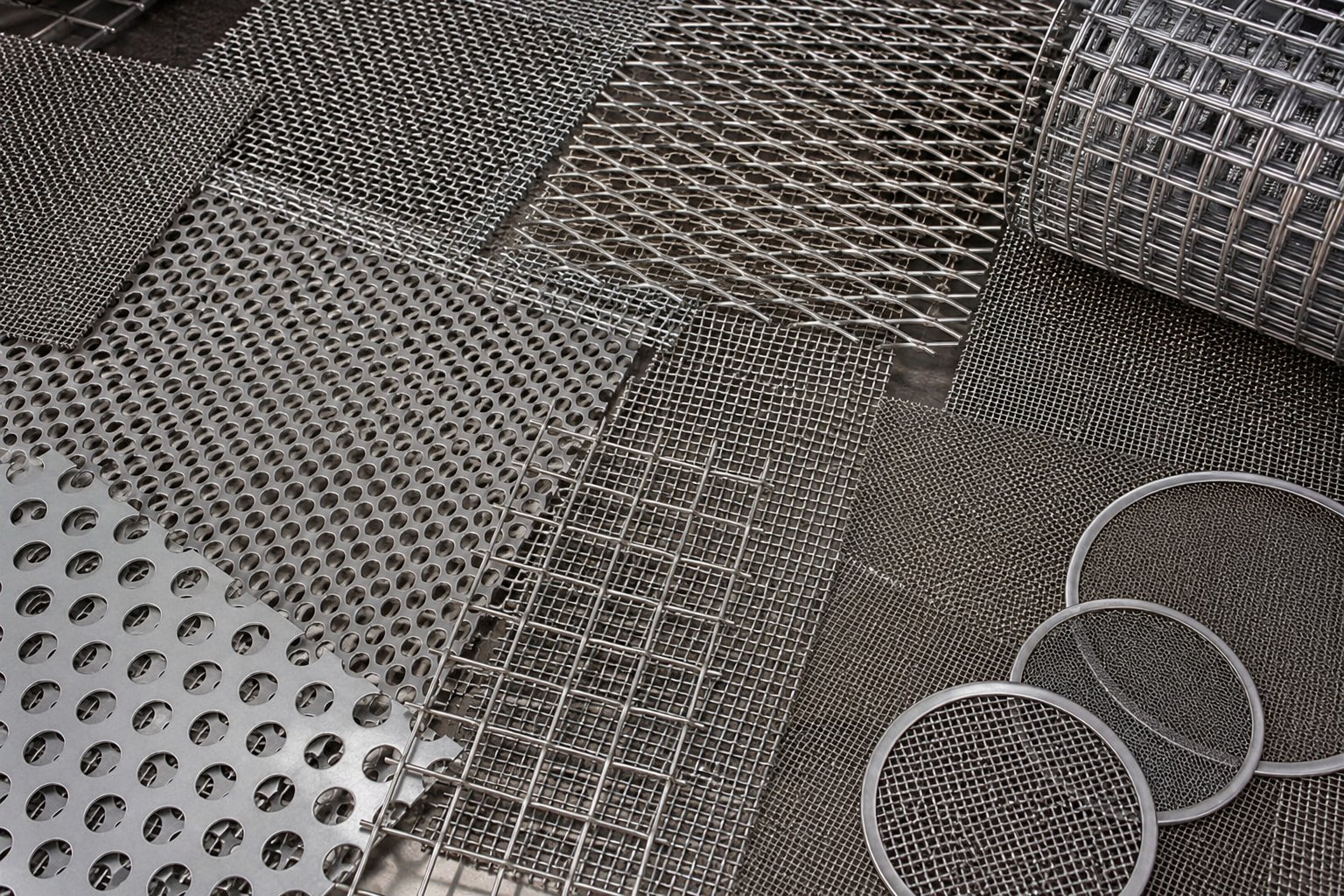
At Industrial Mesh Supplies, we supply a range of industrial screening solutions, including:
Understanding how these products differ helps ensure the correct material is selected from the outset.
Comparing the Main Types of Industrial Wire Mesh
Before looking at each product in more detail, here’s a quick comparison of the most common industrial mesh solutions.
| Product | Best Suited For | Key Advantages |
|---|---|---|
| Woven Wire Mesh | Screening, filtration and mineral processing | High screening accuracy, excellent open area and flexibility under vibration |
| Welded Mesh | Security, reinforcement and structural applications | Strong, rigid construction with excellent dimensional stability |
| Expanded Metal | Walkways, platforms, security screens and industrial flooring | High strength, airflow and visibility with no welded joints |
| Perforated Plate | Heavy-duty screening, ventilation and protective guards | Exceptional durability, rigidity and impact resistance |
Although these products are all manufactured from metal, each has been designed to perform differently depending on the application.
Woven Wire Mesh
Woven wire mesh is produced by interweaving metal wires to create precise openings for screening and filtration.
Its flexibility, high open area and accurate aperture sizes make it one of the most widely used screening products across mining, aggregate processing, recycling and manufacturing industries.
Woven wire mesh is particularly suited to applications requiring accurate particle separation, efficient material flow and continuous vibration. It is also commonly manufactured as tensioned screens, which are designed for vibrating screen equipment across mining, aggregate and mineral processing operations.
Typical applications include:
- Vibrating screens
- Mineral processing
- Aggregate screening
- Filtration
- Food processing
- Chemical processing

In addition to screening applications, woven wire mesh is also manufactured into screen packs, often referred to as rimpacks, for specialised filtration, separation and industrial processing systems where multiple mesh layers are required.
Welded Mesh
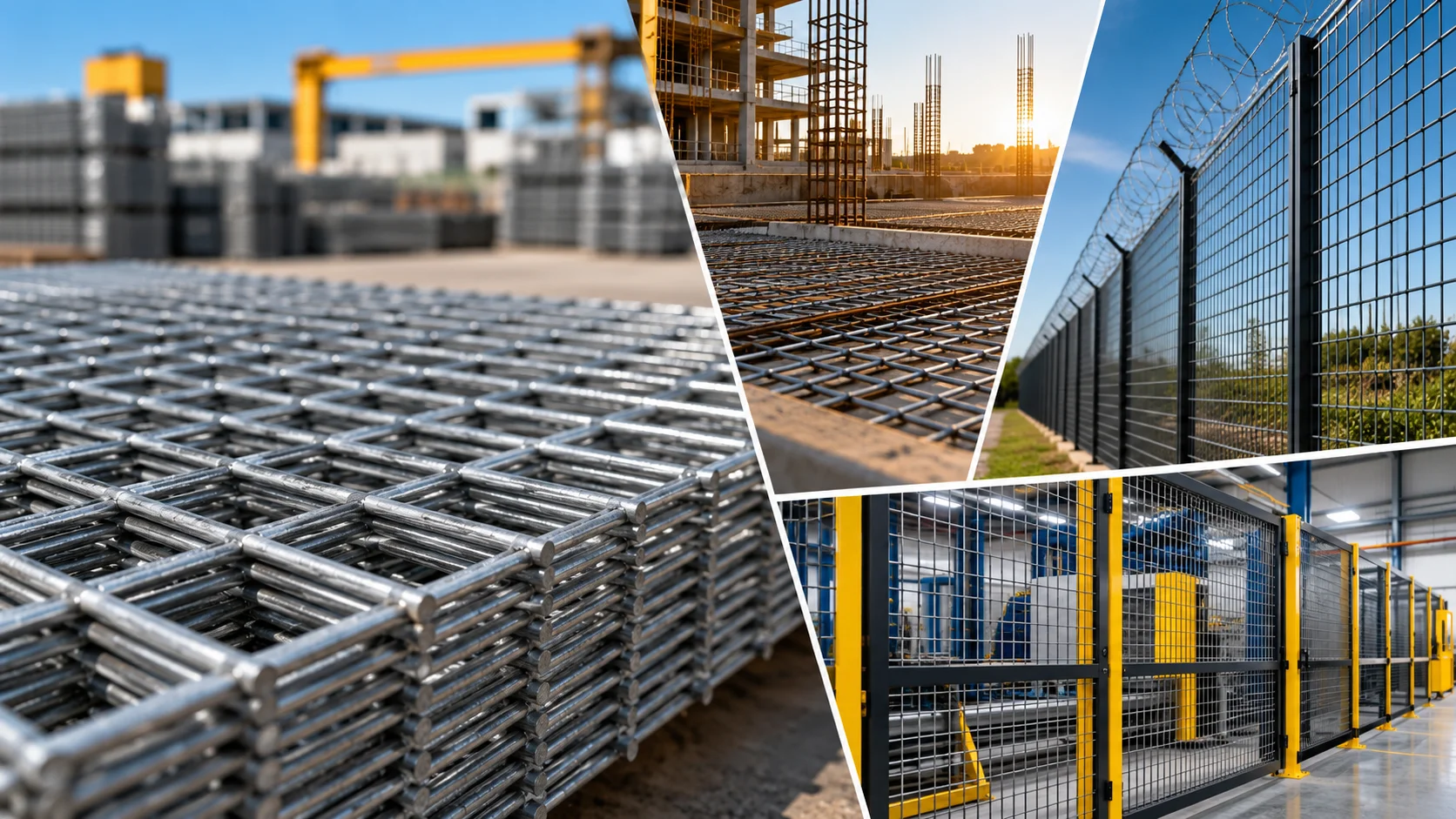
Unlike woven wire mesh, welded mesh is manufactured by electrically welding wires together at each intersection.
This creates a rigid structure that offers excellent dimensional stability and strength.
Welded mesh is commonly used where structural performance is more important than screening accuracy.
Typical applications include:
- Security fencing
- Machine guarding
- Reinforcement
- Storage cages
- Agricultural infrastructure

Expanded Metal
Expanded metal is manufactured by slitting and stretching a single sheet of metal into a rigid diamond-shaped pattern. It is available in both Raised and Flat options, allowing the material to be selected according to the requirements of the application.
Because the material remains one continuous piece, there are no welded joints or weak intersections.
Expanded metal offers an excellent combination of strength, airflow and visibility while remaining lighter than many alternative materials.
Typical applications include:
Typical applications include:
- Walkways
- Platforms
- Security screens
- Machine guards
- Industrial flooring
- Architectural features

Perforated Plate
Perforated plate is manufactured by punching holes into flat sheets of metal.
It offers exceptional rigidity and durability while maintaining consistent opening sizes.
Perforated plate is commonly selected where structural strength, wear resistance and impact performance are essential.
Typical applications include:
Typical applications include:
- Heavy-duty screening
- Ventilation systems
- Acoustic panels
- Protective guards
- Industrial screening
- Architectural cladding

How to Choose the Right Industrial Wire Mesh
Selecting industrial wire mesh should always begin with understanding the application rather than choosing a product.
Material
The operating environment determines which material is most suitable.
For example, Stainless Steel 304 is commonly selected where corrosion resistance is required for general industrial applications, while Stainless Steel 316 is recommended for environments involving acids, chemicals or more corrosive operating conditions. Mild steel may be appropriate for general industrial applications where corrosion resistance is less critical.
Moisture, chemicals, temperature and abrasive materials should all be considered.
Aperture Size
The aperture is the opening between wires or perforations.
It determines which materials pass through the mesh and which are retained.
Selecting the correct aperture is essential for achieving the required screening accuracy and production efficiency.
Wire Diameter
Wire diameter directly affects durability, wear life and open area.
Thicker wires generally provide greater strength but reduce the available open area for material flow.
Finding the correct balance depends on the operating conditions.
Open Area
Open area refers to the percentage of the surface available for material to pass through.
Higher open area generally improves throughput and screening efficiency.
However, increasing open area often reduces overall strength, making it important to balance performance with durability.
Wear and Impact
Applications involving abrasive materials or continuous impact require products capable of withstanding demanding operating conditions.
Selecting a heavier wire diameter or a more rigid product such as perforated plate can significantly improve service life.
Which Mesh Is Best for Your Industry?
Different industries have different operational requirements.
Mining and Mineral Processing
Woven wire mesh remains one of the preferred choices due to its screening accuracy, flexibility and ability to withstand continuous vibration.
Construction
Expanded metal and welded mesh are commonly selected for reinforcement, access platforms and safety applications.
Manufacturing
Manufacturing facilities often use a combination of woven wire mesh, perforated plate and expanded metal depending on the production process.
Food and Chemical Processing
Stainless steel woven wire mesh is widely used where hygiene, corrosion resistance and precise filtration are essential.
Agriculture
Welded mesh is commonly used for enclosures, storage systems and infrastructure due to its strength and durability.
Common Mistakes When Selecting Industrial Wire Mesh
One of the most common mistakes is selecting mesh based solely on aperture size.
While aperture is important, it represents only one part of the overall specification.
Wire diameter, material type, weave pattern, open area and operating conditions all contribute to long-term performance.
Choosing the correct industrial wire mesh means considering the complete application rather than focusing on a single measurement.
Why Working with an Experienced Supplier Matters
Industrial wire mesh is not a one-size-fits-all product.
Every application has unique operating conditions, production requirements and performance expectations.
Working with an experienced supplier helps ensure the correct specification is selected before production begins, reducing unnecessary maintenance, improving operational efficiency and extending product life.
At Industrial Mesh Supplies, we work closely with customers across South Africa to supply industrial screening solutions tailored to their specific requirements.
Key Takeaways
Choosing the right industrial wire mesh is about understanding your application, not simply selecting a product.
By considering factors such as material, aperture size, wire diameter, open area and operating conditions, you can select a solution that delivers reliable, long-term performance.
Whether you require woven wire mesh for precision screening, welded mesh for structural applications, expanded metal for strength and airflow, or perforated plate for heavy-duty environments, selecting the correct specification will maximise efficiency and product life.
If you’re unsure which solution is right for your application, the team at Industrial Mesh Supplies can help identify the most suitable product for your operational requirements. With a workforce boasting over 100 years of combined screening experience, you can rely on practical expertise and trusted advice to help you make the right choice.